Shaikh Ibn Bāz (rahimahullāh) said:
“The early generations (the Salaf), when they were accompanying funerals, would lower their voices, reflect on the state of death and what comes after death. A person should contemplate these great matters.
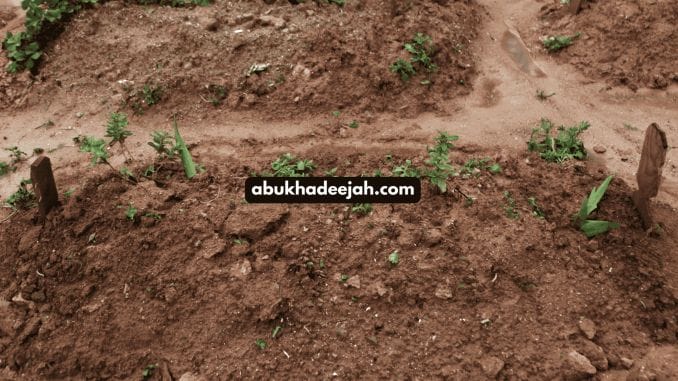
When the deceased has been buried and they have finished burying him, it is prescribed to supplicate for him. The Prophet ﷺ, when he finished burying a deceased person, would stand by the grave and say: “Seek forgiveness for your brother and ask that he be made steadfast, for he is now being questioned.”
So, the Sunnah is to recite after the burial some words of supplications [such as]:
اللَّهُمَّ اغْفِرْ لَهُ، اللَّهُمَّ ثَبِّتْهُ بِالْقَوْلِ الثَّابِتِ
اللَّهُمَّ أَدْخِلْهُ الْجَنَّةَ، وَنَجِّهِ مِنَ النَّارِ
Allāhumma ighfir lahu, Allāhumma thabbit-hu bil-qawli ath-thābiti
Allāhumma adkhil-hu al-jannata, wa najji-hu mina an-nār
“O Allah, forgive him. O Allah, make him steadfast with the firm word. O Allah, admit him into Paradise and save him from the Fire.”
So if one asks for his forgiveness and steadfastness after burial, that is good.”
As for raising voices with the recitation of the Quran, or with dhikr in unison, or congregational supplications with all hands raised and one person recites, and ending with the wiping of their faces—none of that is reported in the Sunnah or from the Sahābah. It is innovation and misguidance.
The Sunnah legislated raising hands in supplication at the graveside individually, but not in congregation. Furthermore, women are permitted to visit the graveyards [occasionally] to be reminded of death, and to supplicate for their deceased. I have explained this elsewhere with proofs.